


The National Dance Education Organization's annual conference will take place from October 3 to 6, 2025, in Detroit, Michigan. Several Colorado State University students and faculty are presenting at the event entitled The Power of Movement: Dance Education Traditions and Innovations.
According to the National Dance Education Organization (NDEO) website, the conference is the premier professional development event for dance educators, featuring over 250 workshops, master classes, panel discussions, paper presentations, social events, and captivating performances. (NDEO.org)
You can support CSU Dance students to attend the conference through our Ramfunder Campaign.
Presentations
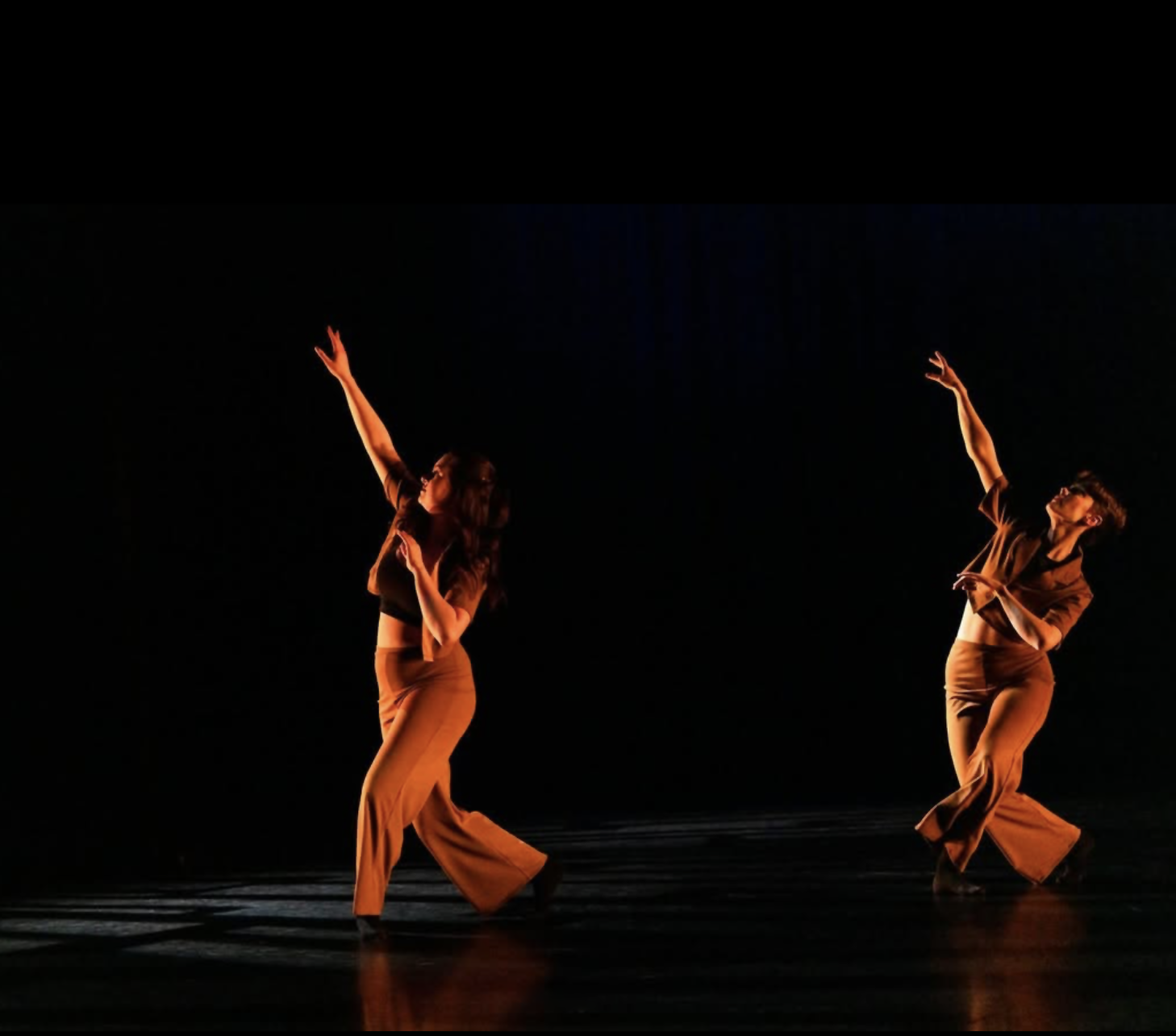
Kristianne Johnson and Oliver Myers perform on a CSU Dance Concert.
Senior dance majors Oliver Myers and Kris Johnson will present Undergraduate Perspectives on Queering Ballet. It is Myers' second time presenting at nationals, which is a significant accomplishment.
How do we, as dancers, choreographers, and dance educators, address the exclusion of LGBTQ identities and stories in ballet? What does the process of queering ballet look like? In this session, we will discuss our two undergraduate capstone works on queering ballet. One project, an Honors thesis, focuses on historical research and identifies ways in which queerness has been represented in ballet throughout its history. The final product is a literature review and a free, online resource easily accessible to those working outside of higher education. The second project, a Capstone project/concert piece, focuses on the reimagination of a classical ballet story, Giselle. It aims to acknowledge the historical background of the ballet while shifting the focus to embody queer themes and identities, allowing the work to be more authentic, reflective, and affirming to the current queer community. The final product aims to demonstrate the importance of portraying queer relationships openly onstage, both as a form of representation and as acknowledgement and affirmation for LGBTQ+ dancers within ballet settings.
Through a discussion of the processes, findings, challenges, and approaches of these two projects, participants will be invited to explore how they can queer ballet in their classrooms and studios. Participants will be provided access to a virtual archive of queer ballet history for their use in and after the session. The discussion aims to emphasize how important it is for LGBTQ+ dancers in ballet settings to feel seen and acknowledged by ballet choreography and history. Our projects aim to demonstrate the harm caused by framing queer stories as “dangerous” to youth or to ballet tradition. Instead, our research seeks to acknowledge diverse history and storytelling in ballet’s pedagogical practices. Participants will reflect and brainstorm with one another on ways to affirm this history and the identities of LGBTQ+ students within their classrooms and pedagogy.
Junior dance major Charli Lobben will give a poster presentation titled Dance as a Tool to Support Neurodivergent Students.
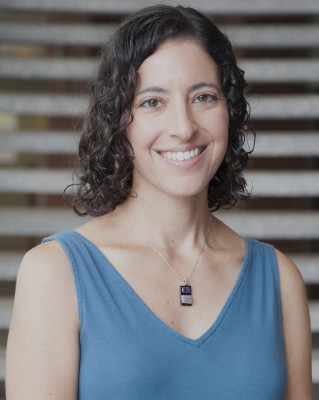 Director of Dance Emily Morgan will present Changing an Institution Through Dance?
Community dance often purports to have an impact, to effect change. Yet measuring that change and assessing impact is complicated by a myriad of factors: identity, power dynamics, intentions, process, product, and institutional structure, among others. This session focuses on a case study of Forklift Danceworks’ (Austin, TX) collaboration with Wesleyan University (CT). In 2021, Forklift Danceworks and Wesleyan created WesWorks, an evening-length performance featuring university staff as performers. Forklift creates performances that make the invisible visible; they have made dances with sanitation workers, power linemen, gondoliers, and many others whose work often goes unseen. Their goal is to activate communities; they view the performance not as the end goal but as the middle of the process. In drawing on theories of change, this paper introduces attendees to the company and the project, then examines the nuances of change and impact that occurred as a result of the creative collaboration, as well as the ongoing challenges in keeping the work alive and moving forward at Wesleyan.
 Dance professor Madeline Harvey will present Caregiver-Educators Cultivating Sustainability
Dance education and motherhood intersect at the nexus of gender, caregiving, and artistic practice, performing a precarious balance of identity and action. Amidst the reverberations of ecological and sociopolitical crises, mothers and artists persist as they must, generating new life, caring for others and self, and creating possibilities of hope through mothering and dance making. Our panel explores teaching and performance through the lens of motherhood. How are mothers uniquely teaching and creating dance? How can mothering lead our students and us through tumultuous times? Our session will offer topical discussions as featured in our forthcoming book, Pandemic Motherhood: Exploring COVID-19 through Engaged Arts and Applied Performance (Routledge). We focus on methods of radical inclusivity, sustainability, and embodied ways of knowing. We will also dedicate time to brainstorming peer support and activism for mother-accessible practices at our various institutions.